Zodiac Constellations: Mapping the Sky's Twelve Storytellers
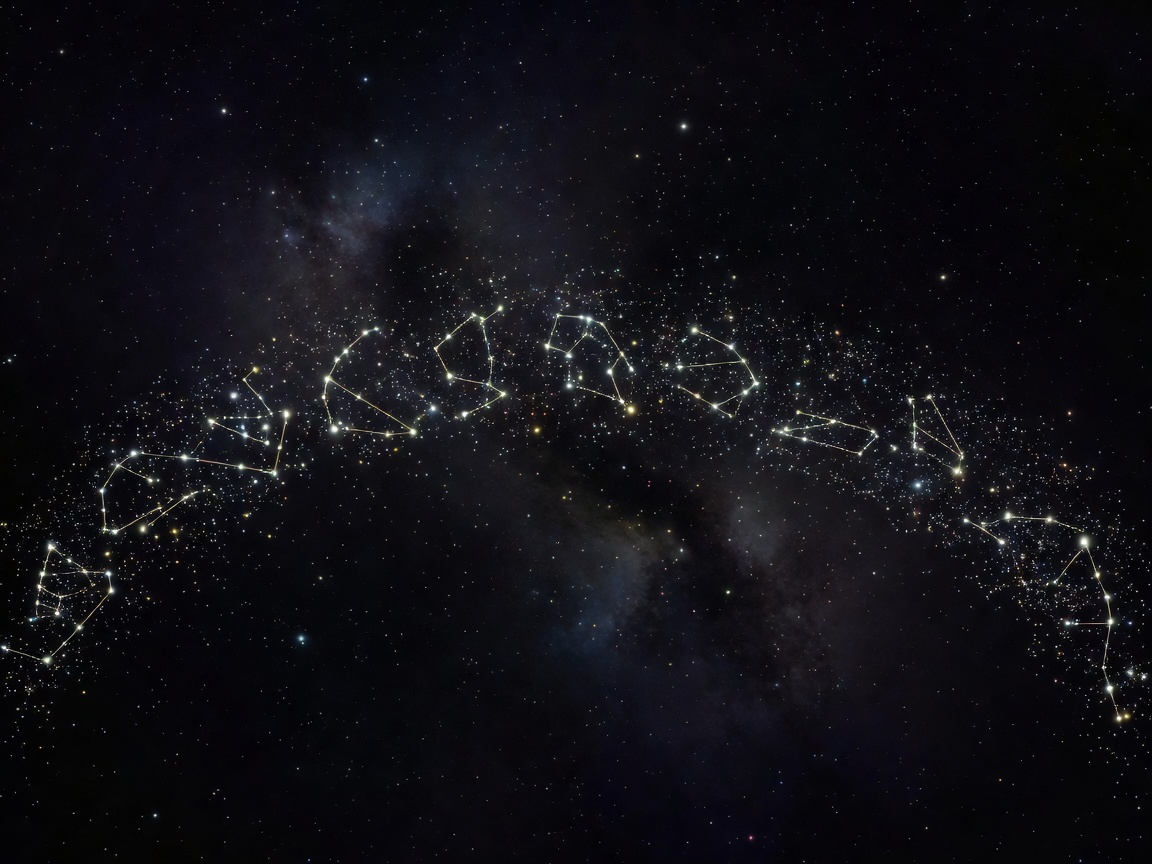
The zodiac began as an observational tool: ancient sky-watchers noticed that the sun, moon and planets always travelled through the same narrow band of stars, and they carved that band into twelve constellations. Today, most horoscope columns use an abstract 30-degree wheel rather than the actual stars — but understanding the original constellations still explains a lot about how astrology got its symbolism.
Tropical vs Sidereal Zodiac
Western astrology almost always uses the tropical zodiac, which is fixed to the seasons rather than the stars: 0° Aries is permanently pinned to the spring equinox. Vedic (Jyotisha) astrology uses the sidereal zodiac, which is fixed to the actual constellations. Because of a slow wobble in Earth's axis called precession, the two systems have drifted about 24 degrees apart over the last two millennia — which is why your tropical sun sign and your sidereal sun sign can differ by a full sign.
| System | Reference Point | Used By | Current Offset |
|---|---|---|---|
| Tropical | Spring equinox (season-based) | Western/modern astrology | Baseline (0°) |
| Sidereal | Fixed background stars | Vedic/Jyotisha astrology | ~24° behind tropical |
The Twelve Signs and Their Star Groups
Each sign corresponds to a real constellation the sun tropically passed through around 2,000 years ago, even though the sun no longer aligns with it on the same calendar dates today. Here's the traditional line-up used by most tropical astrologers:
| Sign | Approx. Dates | Element | Ruling Planet |
|---|---|---|---|
| Aries | Mar 21 – Apr 19 | Fire | Mars |
| Taurus | Apr 20 – May 20 | Earth | Venus |
| Gemini | May 21 – Jun 20 | Air | Mercury |
| Cancer | Jun 21 – Jul 22 | Water | Moon |
| Leo | Jul 23 – Aug 22 | Fire | Sun |
| Virgo | Aug 23 – Sep 22 | Earth | Mercury |
| Libra | Sep 23 – Oct 22 | Air | Venus |
| Scorpio | Oct 23 – Nov 21 | Water | Mars/Pluto |
| Sagittarius | Nov 22 – Dec 21 | Fire | Jupiter |
| Capricorn | Dec 22 – Jan 19 | Earth | Saturn |
| Aquarius | Jan 20 – Feb 18 | Air | Saturn/Uranus |
| Pisces | Feb 19 – Mar 20 | Water | Jupiter/Neptune |
Elements & Modalities
Signs are grouped by element (fire, earth, air, water — describing temperament) and by modality (cardinal, fixed, mutable — describing how a sign initiates, sustains or adapts to change). Cardinal signs (Aries, Cancer, Libra, Capricorn) open each season and tend toward initiative. Fixed signs (Taurus, Leo, Scorpio, Aquarius) anchor the middle of a season and favour consistency. Mutable signs (Gemini, Virgo, Sagittarius, Pisces) close out a season and lean toward adaptability. Combining element and modality gives each sign its distinct flavour — Cardinal Fire (Aries) reads very differently from Mutable Fire (Sagittarius).
Pros and Cons of Constellation-Based Astrology
Pros
- Grounded in observable sky positions, not abstract theory alone
- Explains the historical origin of sign symbolism and mythology
- Sidereal systems track precession, staying aligned with actual stars
- Useful entry point for stargazing and constellation identification
Cons
- Constellations vary wildly in width, unlike the equal 30° tropical slices
- A 13th constellation, Ophiuchus, overlaps the ecliptic and is usually ignored
- Tropical and sidereal sun signs can disagree, causing confusion
- Most modern horoscope content uses tropical dates, not actual star positions
How to Start Observing
You don't need a telescope to begin. Start with a free planetarium app or a star chart for your latitude and look for Orion's Belt as an anchor point — it sits near Taurus and Gemini. Observe on a clear, moonless night, away from city lights, and give your eyes 15–20 minutes to adjust to the dark. Once you can reliably spot two or three zodiac constellations, cross-reference them with your chart to see how the "real sky" compares with the tropical wheel your birth chart is built on.