Birth Chart Basics: Reading Your Personal Sky Map
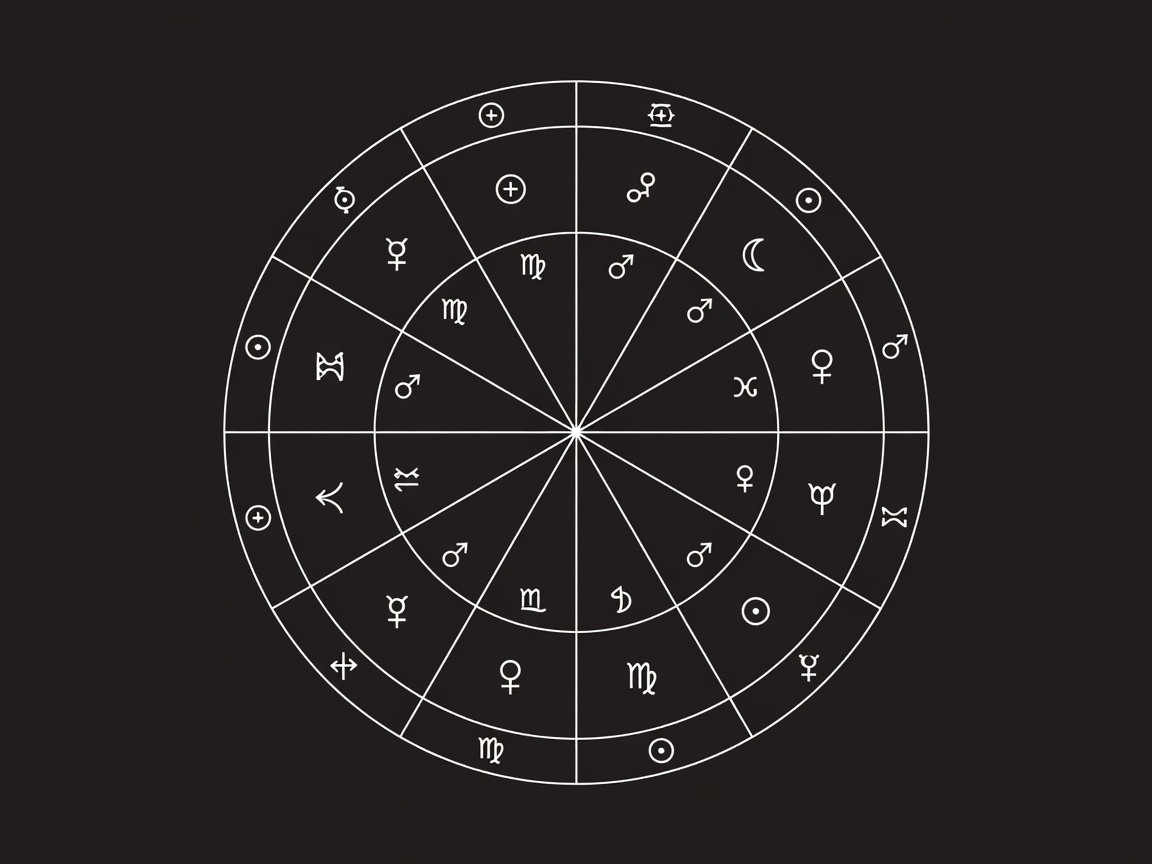
A birth chart (or natal chart) is a snapshot of where every planet sat in the sky at the exact moment and place you were born. It's astrology's core document — everything from Sun-sign columns to professional readings is a simplification of this one wheel.
The Three Core Components
Most beginner guidance starts with the "Big Three": your Sun sign (core identity, the sign the Sun occupied at your birth), your Moon sign (emotional instincts, based on the Moon's much faster orbit), and your Ascendant or Rising sign (the sign rising on the eastern horizon at your exact birth time, shaping first impressions and outward style). The Ascendant requires an accurate birth time — even a 15-minute error can shift it into a different sign.
The Twelve Houses
Houses divide the chart into twelve life areas that a planet's sign gets applied to. A Venus in Leo in the 7th house, for instance, describes romantic style differently than the same Venus in Leo in the 2nd house.
| House | Life Area |
|---|---|
| 1st | Self, appearance, first impressions |
| 2nd | Money, possessions, self-worth |
| 3rd | Communication, siblings, short trips |
| 4th | Home, family, roots |
| 5th | Romance, creativity, children |
| 6th | Work, health, daily routine |
| 7th | Partnerships, marriage, contracts |
| 8th | Shared resources, intimacy, transformation |
| 9th | Travel, philosophy, higher learning |
| 10th | Career, reputation, public life |
| 11th | Friendships, community, goals |
| 12th | Subconscious, solitude, release |
Aspects: How Planets Talk to Each Other
Aspects are the angular relationships between two planets, measured in degrees around the chart. They describe whether two planetary energies flow easily together or create friction.
| Aspect | Angle | Nature |
|---|---|---|
| Conjunction | 0° | Blended, intensified |
| Sextile | 60° | Easy, supportive |
| Square | 90° | Tense, motivating friction |
| Trine | 120° | Flowing, harmonious |
| Opposition | 180° | Polarised, needs balance |
Free vs Paid Chart Tools
You don't need to calculate any of this by hand. Here's how popular chart-generation tools compare:
| Tool | Price | Best For |
|---|---|---|
| Astro.com (Extended Chart) | Free | Precise data, multiple house systems |
| Co-Star app | Free, optional add-ons | Quick daily AI-style summaries |
| The Pattern app | Free / $7.99 monthly premium | Relationship and timing insights |
| Professional astrologer session | $60–$250 per session | In-depth, personalised interpretation |
Pros and Cons of Self-Reading Your Chart
Pros
- Free tools make generating an accurate chart instant and accessible
- Builds genuine literacy in symbolism rather than relying on generic horoscopes
- No appointment needed — you can revisit your chart any time
Cons
- Requires an accurate birth time for house and Ascendant precision
- Self-interpretation can miss nuance a trained astrologer would catch
- Learning curve for aspect patterns and house systems takes practice