Planets & Celestial Bodies: The Observatory's Moving Cast
If the zodiac signs are the stage, the planets are the actors. Each one carries a distinct symbolic role, moves at its own speed, and — when it appears to slow, stop and reverse in the sky — triggers the astrological phenomenon known as retrograde. Here's how the traditional and modern planetary sets compare.
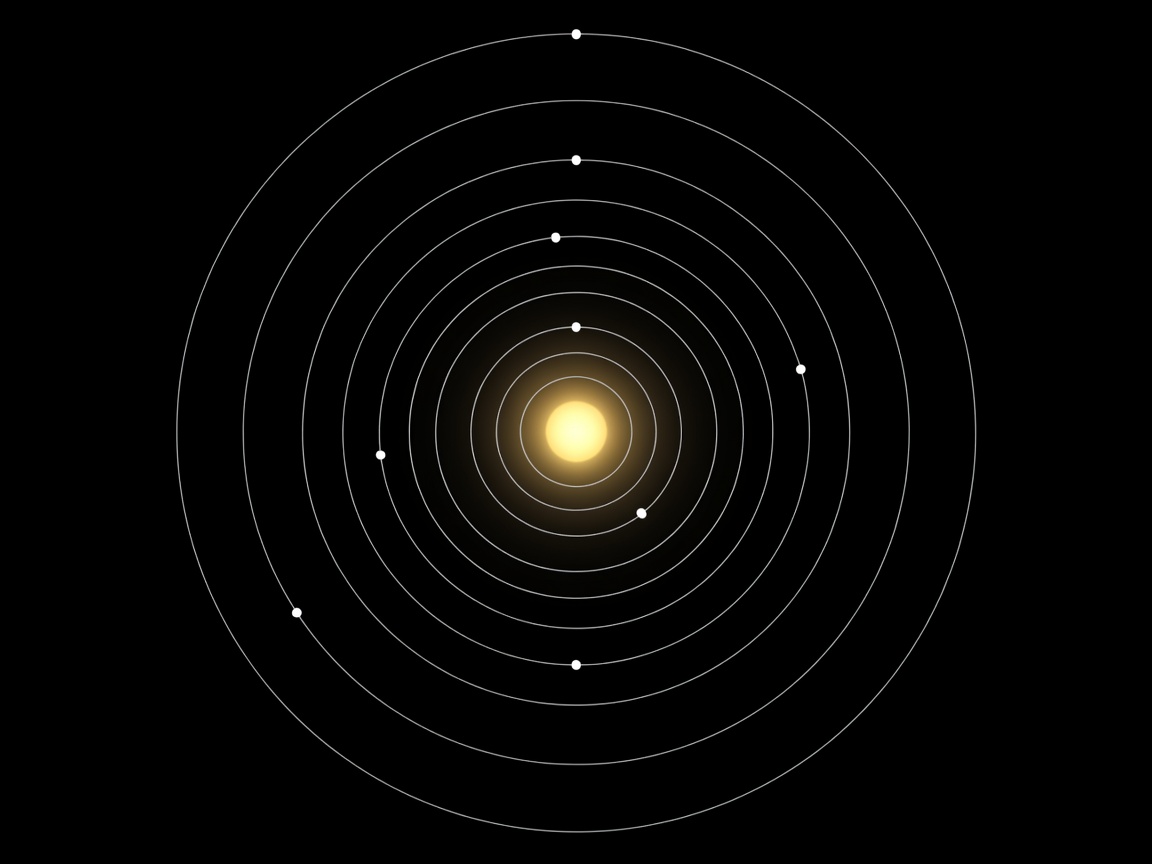
Traditional Seven vs Modern Ten
Before telescopes, astrologers worked with the seven bodies visible to the naked eye: Sun, Moon, Mercury, Venus, Mars, Jupiter and Saturn. Uranus (1781), Neptune (1846) and Pluto (1930, later reclassified as a dwarf planet) were added as they were discovered, and modern Western astrology usually includes all ten in a full chart reading.
| Set | Bodies Included | Speed of Movement | Typical Use |
|---|---|---|---|
| Traditional Seven | Sun, Moon, Mercury, Venus, Mars, Jupiter, Saturn | Fast to moderate | Classical and Hellenistic astrology |
| Modern Ten | Traditional seven + Uranus, Neptune, Pluto | Adds very slow, generational movement | Modern psychological astrology |
Planetary Rulerships
| Planet | Rules | Keyword | Orbital Period |
|---|---|---|---|
| Sun | Leo | Identity | 1 year (apparent) |
| Moon | Cancer | Emotion | ~27.3 days |
| Mercury | Gemini, Virgo | Communication | 88 days |
| Venus | Taurus, Libra | Love, values | 225 days |
| Mars | Aries | Drive, action | 687 days |
| Jupiter | Sagittarius | Expansion, luck | ~12 years |
| Saturn | Capricorn | Structure, limits | ~29 years |
| Uranus | Aquarius | Disruption, change | ~84 years |
| Neptune | Pisces | Dreams, dissolution | ~165 years |
| Pluto | Scorpio | Transformation | ~248 years |
Retrograde Motion Explained
Retrograde is an optical illusion: from Earth's moving vantage point, an outer planet can appear to travel backward against the background stars, the same way a slower car seems to move backward when you overtake it on a motorway. Mercury retrograde happens three to four times a year and lasts about three weeks; astrologers traditionally associate it with miscommunication and technical hiccups, though there is no scientific evidence linking planetary motion to daily events. Outer planet retrogrades (Jupiter through Pluto) last for months and are generally read as periods of internal review rather than external disruption.
Pros and Cons of Including Outer Planets
Pros
- Adds generational context — whole age groups share the same Uranus/Neptune/Pluto sign
- Explains slower, deeper psychological themes classical astrology didn't cover
- Matches modern astronomical knowledge of the solar system
Cons
- Outer planets move so slowly they say little about individual distinction within a generation
- Classical techniques (like traditional rulership systems) weren't built with them in mind
- Adds complexity that can overwhelm chart-reading beginners
Observing Planets Tonight
Unlike stars, planets don't twinkle — that steady light is your first clue you've spotted one. Venus is the brightest object after the Sun and Moon and is easiest to see just after sunset or before sunrise. Jupiter and Saturn are bright enough to see with the naked eye and reveal moons or rings through basic binoculars. Free apps such as Stellarium or SkySafari will show you exactly where each planet sits from your location tonight, letting you match the astrological chart to the physical sky.